Bonn Science Night 2026

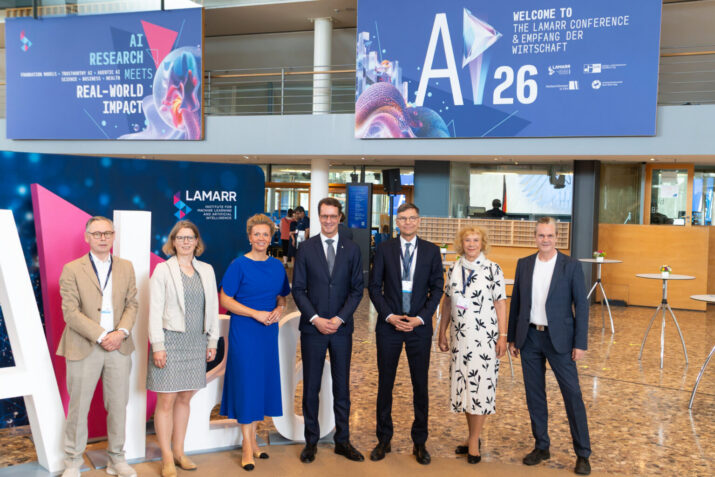
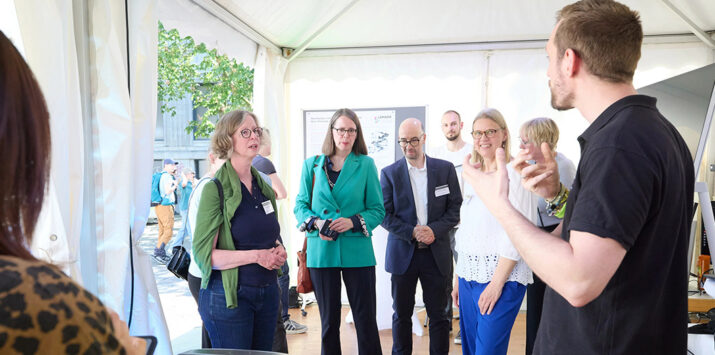
How will artificial intelligence transform the medicine of the future? What role will it play in addressing societal challenges such as education, caregiving, and managing natural hazards? These questions were the focus of the 15th Bonn Science Night on May 21 and 22, 2026, under the theme “Diagnosis: The Future.” The theme tied in with the 2026 Year of Science, “Medicine of the Future,” while also focusing on technological developments that extend far beyond the healthcare sector. Universities, research institutes, and scientific organizations from the region presented current research on Bonn’s Münsterplatz and invited the public to engage in direct dialogue.

Am I just my demographics? Challenges in Modeling Annotators’ Perspectives

In the field of Data Perspectivism, perspective has emerged as an umbrella term encompassing annotators’ points of view and culturally shaped worldviews. When modeling annotators, researchers have explored a variety of potential predictors, with demographics receiving particular attention, especially following the rise of techniques such as sociodemographic prompting. In this talk, 1 will examine the field’s strong emphasis on annotators’ sociodemographic information and highlight the limitations of this approach. I will focus on challenges in annotator modeling and the complexities of addressing highly subjective linguistic phenomena, going through data collection, modeling and evaluation.

Exploring bias, explaining hate: two critical on detection in studies harm Natural Language Processing

The study of harms in NLP is a fast-evolving field of research, which in a few years has seen the need of considering the subjectivity that characterizes this
phenomenon. In this talk | present two complementary research projects that address this topic from two different perspectives. First, I discuss the systematic presence of bias against women and people with non-Western origin in data filtering strategies for harm reduction in pretraining datasets (Stranisci, & Hardmeier, C., 2025). Then, 1 describe the results of our study on canceling attitudes, whose perception appears to strongly rely on individuals’ moral stance rather than sociodemographic features (Lo, et al,
2025).

Findings from Empirical Studies of Real-world Interactions with LLM-based Conversational Systems

The emergence of large language models has transformed the landscape of conversational systems, but our understanding of how users interact with these systems and what they seek to accomplish remains limited. This talk presents findings from two empirical studies investigating real-world interactions with LLM-based and voice-based conversational systems. The first study analyses over 15,000 prompts submitted to Google Gemini, revealing how users formulate structured, often imperative inputs that go well beyond traditional informational,
navigational,
transactional search intents. This analysis highlights the expanding role of LLMs in supporting complex tasks such as content creation and information extraction. The second study examines over 600,000 interactions with Google Assistant across 173 users, offering insight into voice-based conversational systems’ everyday utility and limitations. The data reveal a predominance of simple instructions and a lack of deeper information-seeking behaviours. Together, these studies offer a nuanced account of user intent, interaction styles, and the evolving role of conversational systems in supporting diverse and situated information needs.

Mining Facebook to Understand the Timeline of Parkinson’s Disease

Parkinson’s disease (PD) is a progressive neurodegenerative disorder with a lengthy prodromal phase that remains difficult to capture using traditional clinical tools. Most monitoring begins only after diagnosis, limiting insight into early symptoms and the lived experience of disease progression. In this talk, I will present work evaluating Facebook as a novel, longitudinal data source for studying PD-related disclosures across the disease timeline
-from years before diagnosis to later stages.

Context-Aware Large Language Models for Mental Health Risk Detection

The increasing burden of mental health disorders-including depression, anxiety, OCD, and suicidal ideation-necessitates the development of advanced Al frameworks capable of interpreting complex emotional signals from language. Our research focuses on context-aware large language models (LLMs) that capture nuanced emotional and psychological patterns embedded in long, unstructured text. These models are designed to preserve semantic coherence and context across sequences, enabling more accurate detection of early mental health risk factors. We introduce a multi-task representation learning approach that integrates subject specific and context-specific features for detecting a range of mental health conditions from both psychiatric and social media texts. This strategy allows for task-specific adaptation while maintaining shared representations, enhancing generalization across related emotional and behavioral tasks. A key aspect of our work involves Hierarchical Explainable Al (XAI), where we employ layered attention mechanisms and graph-based interpretability techniques to identify critical risk-inducing patterns in suicidal and emotionally volatile texts. The framework not only highlights word-level and sentence-level importance but also models higher-order semantic dependencies across text segments, offering transparency in sensitive decision-making contexts. Our current direction explores the use of Explainable Graph Attention Networks and Deep Q-Learning to identify high-risk emotional states and generate context-aware intervention strategies. We further envision the integration of generative Al for producing personalized, real-time supportive responses. Future extensions involve multimodal LLMs that combine text, image, and genetic data for a more holistic understanding of mental health.

Ontologies in Design: How Imagining a Tree Reveals Possibilities and Assumptions in Large Language Models

Amid the recent uptake of Generative Al, sociotechnical scholars and critics have traced a multitude of resulting harms, with analyses largely focused on values and axiology (e.g., bias). While value- based analyses are crucial, we argue that ontologies-concerning what we allow ourselves to think or talk about-is a vital but under-recognized dimension in analyzing these systems. Proposing a need for a practice-based engagement with ontologies, we offer four orientations for considering ontologies in design: pluralism, groundedness, liveliness, and enactment. We share examples of potentialities that are opened up through these orientations across the entire LLM development pipeline by conducting two ontological analyses: examining the responses of four LLM-based chatbots in a prompting exercise, and analyzing the architecture of an LLM-based agent simulation. We conclude by sharing opportunities and limitations of working with ontologies in the design and development of sociotechnical systems.