
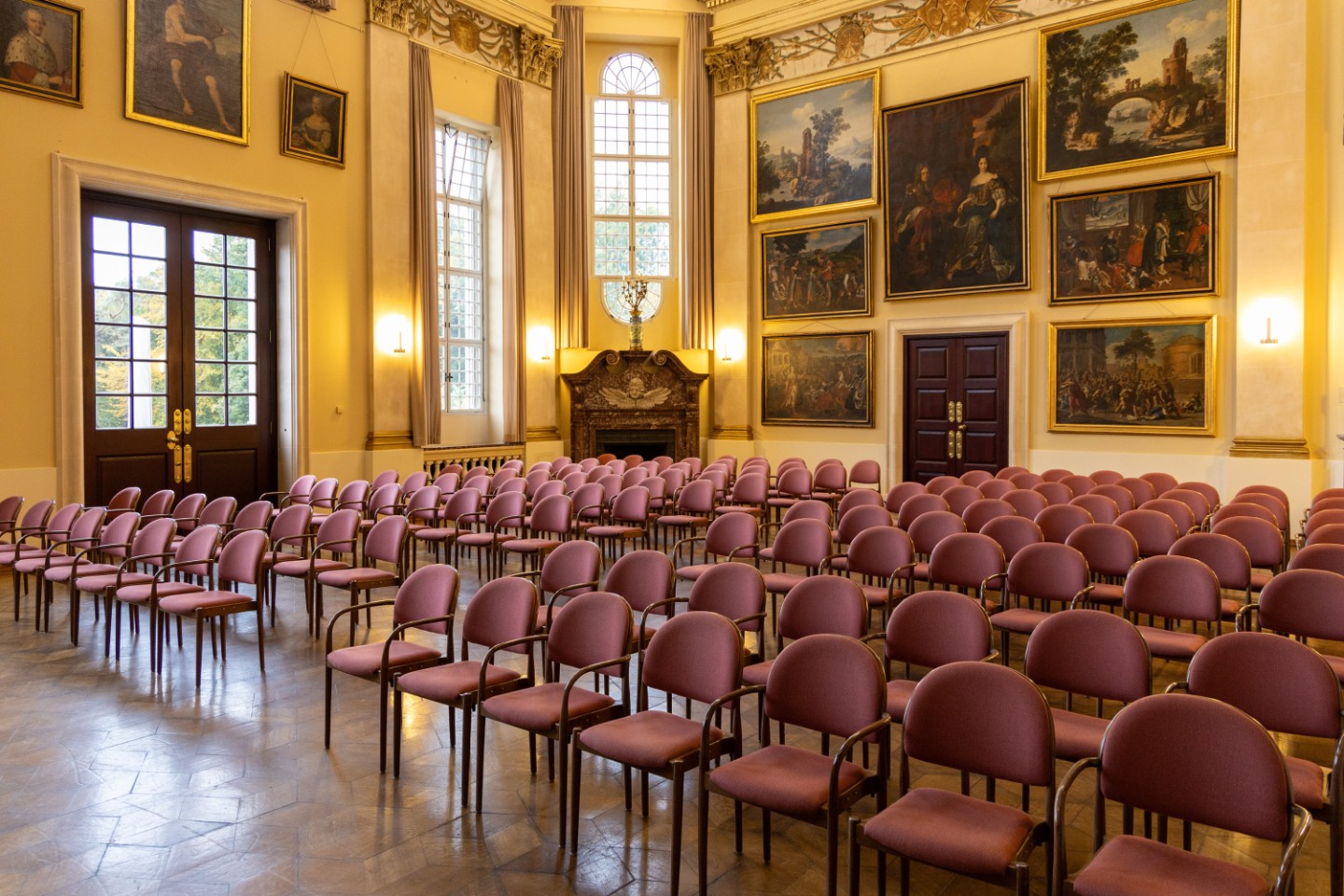
The symposium takes place in a very special place: Birlinghoven Castle is an unparalleled conference venue with artwork, a unique atmosphere, and rooms that breathe the spirit of centuries. © Fraunhofer SCAI
Industry Symposium on “AI in Life Sciences and Medicine” – 3rd edition
In 2023, the Life Science Informatics (LSI) curriculum at the Bonn-Aachen International Center for Information Technology (B-IT) celebrated its 20th anniversary. To mark this milestone, three professors who are strongly committed to advancing applied and translational research initiated a symposium reflecting the program’s core mission: educating the next generation of professionals for careers in industrial and translational research. What was originally planned as a one-time event exceeded all expectations, leading to the decision to establish the symposium as an annual event.
The “AI in Life Sciences and Medicine” symposium deliberately differs from traditional formats. It is neither a purely academic conference nor a business-focused industry event. Instead, its goal is to bring together researchers from academia and industry and to foster exchange across disciplines – particularly between life sciences, medicine, and computer science. This distinctive format has attracted an increasing number of internationally recognized speakers and participants in recent years.
This year’s symposium focuses on the following overarching themes:
Day 1 – Making Data Ready for AI
The first day addresses a fundamental prerequisite for successful AI applications: data readiness. We will explore this topic from a holistic perspective, covering technical, legal, and ethical dimensions. Our distinguished speakers include experts who are actively shaping AI-ready infrastructures within their organizations and who will present practical examples demonstrating how awareness of AI readiness can be translated into real-world implementation.
What “AI-ready data” is
The term “AI-ready data” refers to data that has been carefully optimized for efficient use by artificial intelligence systems – particularly for training, fine-tuning, or running AI models) and applications.
Most definitions from experts (IBM, Gartner, Microsoft, Denodo, Alteryx, etc.) emphasize high quality, consistent structure, and rich documentation as highly relevant qualities for data’s “AI-readiness”.
The concept of AI-ready data is closely linked to the FAIR concept. This adds fundamental FAIR data properties to the list of criteria for “AI-readiness”.
Why It Matters (Especially in 2026)
Poor data readiness causes project failure, biased models, hallucinations, and compliance risks. As a result, AI-ready data is now seen as the real competitive edge – not just the model itself.
Furthermore, the concept has evolved from basic “open data” or “machine-readable data” to something more advanced, tailored to modern AI demands like LLMs and real-time agents.
Day 1 of our symposium explores this topic in great detail, including ethics and legal aspects. The impressive speaker list comprises experts who work on AI-readiness within their organizations and who provide impressive examples for not only generating awareness of AI-readiness, but also real-world application of AI-ready data.
Day 2 – Transformative AI Applications in Biomedicine
The second day highlights three transformative research areas at the frontier of biomedical AI: Foundation Models, Causal Inference, and Digital Twins. Leading experts in these fields will present recent advances and discuss how theoretical innovations can be translated into clinical decision-making and healthcare applications. The symposium will conclude with a panel discussion on how AI systems can successfully move from research environments into clinical practice – thereby connecting the practical challenges of day one with the technological innovations presented on day two.
We look forward to welcoming you to an engaging and insightful event at Birlinghoven Castle!
The second day of the symposium, themed “AI in Medicine,” explores three transformative pillars at the cutting edge of biomedical research: Foundation Models, Causal Inference, and Digital Twins. This program bridges the gap between theoretical breakthroughs and their translation into clinical decision-making.
Session 1: Foundation Models in Life Sciences
Foundation models aim to master the “language” of specific data types, increasing the efficiency of downstream model development.
- Keynote: Professor Jürgen Bajorath (University of Bonn) will demonstrate how these models have redefined the landscape of AI-driven drug discovery in recent years.
- Industry perspectives: Christian Günster (WIdO) and Dr. Ashar Ahmad (Grünenthal) will talk about the development and application of foundation models in health insurance companies and pharma industry.
Session 2: From Predictions to Causal Reasoning
While traditional machine learning excels at predictive performance, it often neglects the underlying causality.
- Keynote: Professor Stefan Feuerriegel (LMU) will present the latest advancements in Causal Machine Learning, which now enable the estimation of causal effects directly from observational data – a vital step for evidence-based medicine.
- Industry perspective: Professor Steve Gardner (PrecisionLife) will highlight his view on how causal relationships can be leveraged in medicine.
Session 3: AI-Assisted Digital Twins
Digital twins represent the future of precision medicine by combining patient-specific data with multi-scale simulation models for personalized forecasting.
- Keynote: Professor Kristin Reiche (University of Leipzig and Fraunhofer IZI) will showcase the practical implementation of a digital twin within the EU project CERTAINTY.
- Industry perspective: Further insights into implementation and practical use of digital twins in pharma and medtech industry will be provided by Nikita Makarov (Roche) and Oliver Frings (Siemens Healthineers).
Panel Discussion: Translating AI into Medical Practice
We conclude the day with an interdisciplinary panel to identify the essential steps required to move AI systems from research into the clinical practice.
Registration
Please note that this symposium primarily targets industry professionals. Student participation is welcome but will be accepted secondarily, depending on availability (limited to 100 attendees).
Industry: € 150
Academia: € 100
Students: € 50
Registration deadline: September 1, 2026
Impressions of the Industry-Symposium 2025
-

- Birlinghoven Castle

-
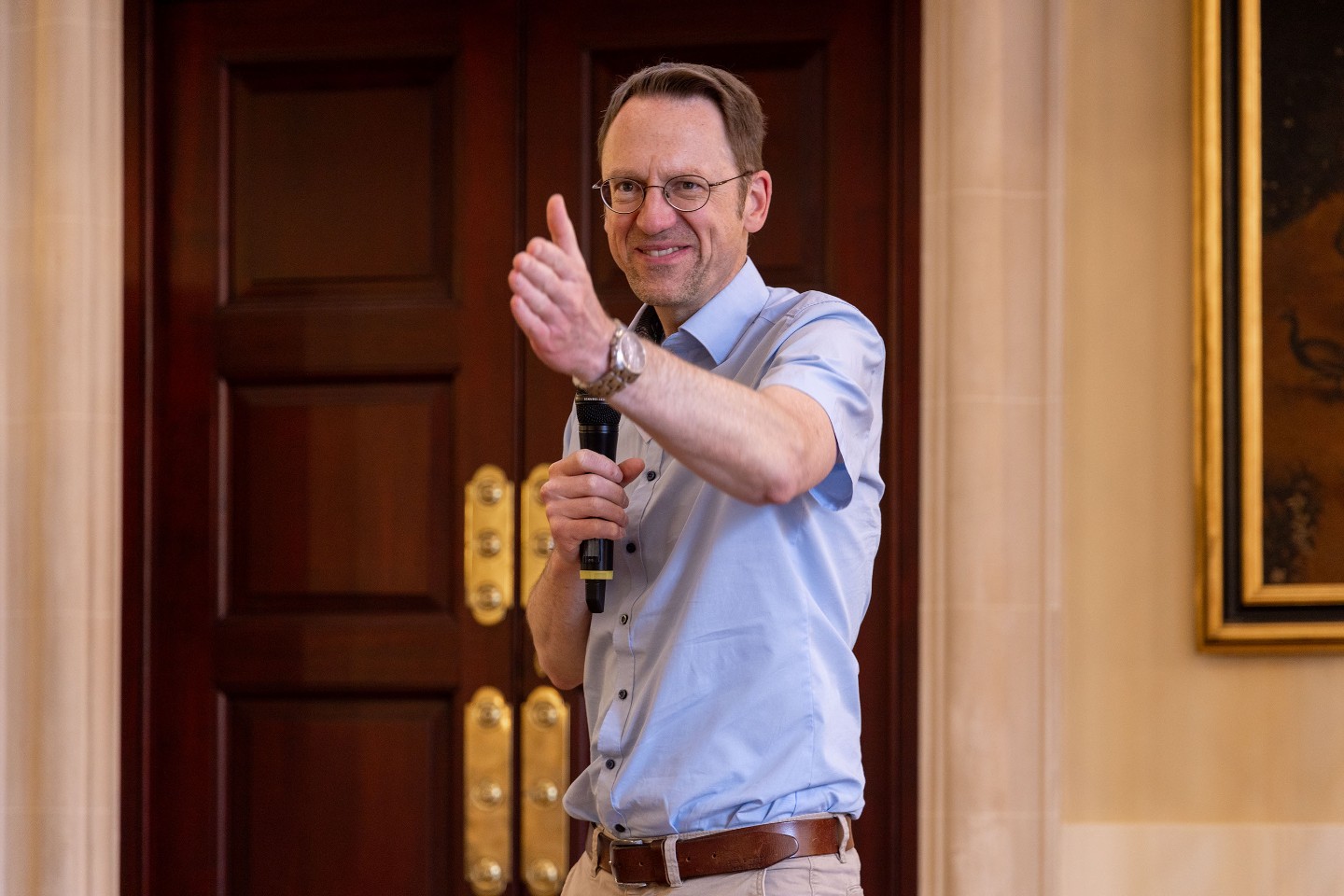
- Prof. Dr. Holger Fröhlich – Head of Business Area Biomedical Data Intelligence, Head of Department Biomedical AI & Data Science
-
- Prof. Dr. Martin Hofmann-Apitius – Head of Business Area Biomedical Data Intelligence, Head of Department Bioinformatics
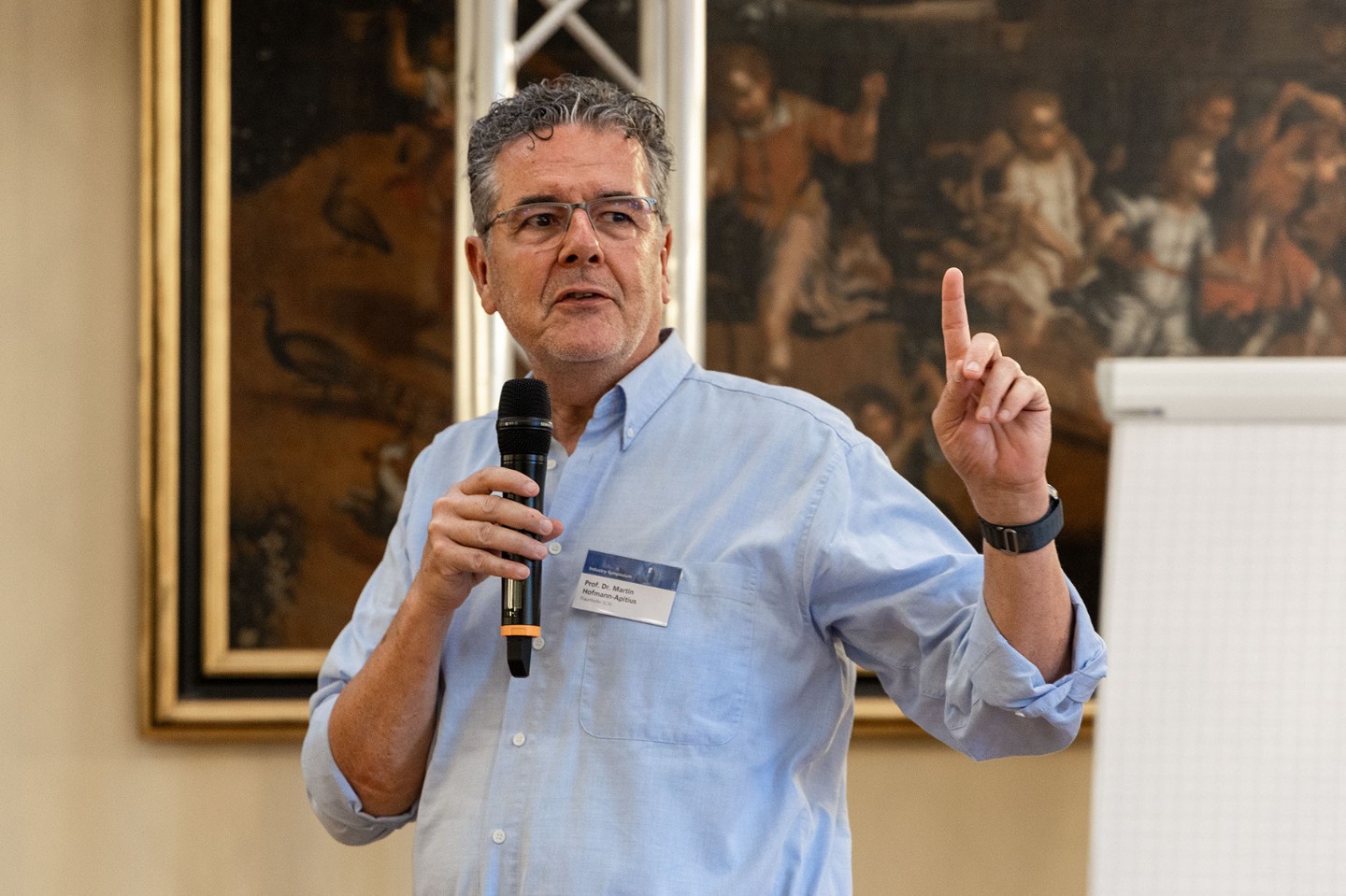
Prof. Dr. Martin Hofmann-Apitius
Head of Business Area Biomedical Data Intelligence, Head of Department Bioinformatics
Phone +49 2241 14-4103
Prof. Dr. Holger Fröhlich
Head of Business Area Biomedical Data Intelligence, Head of Department Biomedical AI & Data Science
Mobile +49 151 70597940
Alina Enns
Team Assistant
Phone +49 2241 14-4097