
© Maximilian Waidhas / b-it
Laborjournal: Jürgen Bajorath Discusses the Evolving Role of Artificial Intelligence in Drug Discovery
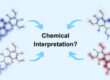
Artificial Intelligence is achieving increasingly impressive results in drug discovery. Yet as these models become more powerful, they also raise a fundamental scientific question: when do they produce reliable scientific insights, and when do they merely generate plausible predictions? In a recent essay published in Laborjournal, Prof. Dr. Jürgen Bajorath, Chair of the Life Sciences & Health area at the Lamarr Institute and Professor at the University of Bonn, addresses this question and argues that explainable AI should play a central role in computer-aided drug discovery.
Accurate predictions do not replace scientific understanding
Modern AI models can analyze millions of chemical compounds, identify promising drug candidates and uncover complex patterns in biological data. This opens up enormous opportunities for biomedical research. Scientific progress, however, depends on more than accurate predictions. Researchers also need to understand how a model arrives at its conclusions and which biological mechanisms its predictions reflect.
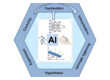
This is the central argument of Bajorath’s essay. He argues that explainable AI should not be viewed as an optional add-on, but as a prerequisite for meaningfully integrating computational and experimental research. AI can help generate hypotheses, guide experiments and accelerate discovery. Scientific knowledge, however, only emerges when computational predictions can be interpreted, experimentally validated and placed into their biological context.
Building on recent research into AI models
The essay builds on Bajorath’s recent research on transformer models in chemistry. In a study published in the fall of 2025, his team investigated what these powerful AI models actually learn from chemical data. The study showed that strong predictive performance does not necessarily imply a scientific understanding of chemical relationships. The new essay takes this insight one step further by asking what follows from it: how should AI systems be designed and applied so that they contribute not only reliable predictions but also genuine scientific understanding?
This question lies at the intersection of computer science, chemistry and the experimental life sciences. It also reflects a central research focus of the Lamarr Institute, where researchers work across disciplines to develop AI methods that combine high performance with transparency, interpretability and scientific reliability. Particularly in sensitive fields such as drug discovery, the value of an AI system depends not only on the quality of its predictions but also on whether researchers can understand, validate and responsibly apply its results.
Contact
Prof. Dr. Jürgen Bajorath
Life Science Informatics & Data Science Research Group (b-it)
Lamarr Institute for Machine Learning and AI
Email: bajorath@bit.uni-bonn.de
More Information
Jannik P. Roth, Jürgen Bajorath: Unraveling learning characteristics of transformer models for molecular design, Patterns, https://doi.org/10.1016/j.patter.2025.101392, URL: https://www.cell.com/patterns/fulltext/S2666-3899(25)00240-5