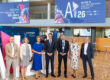
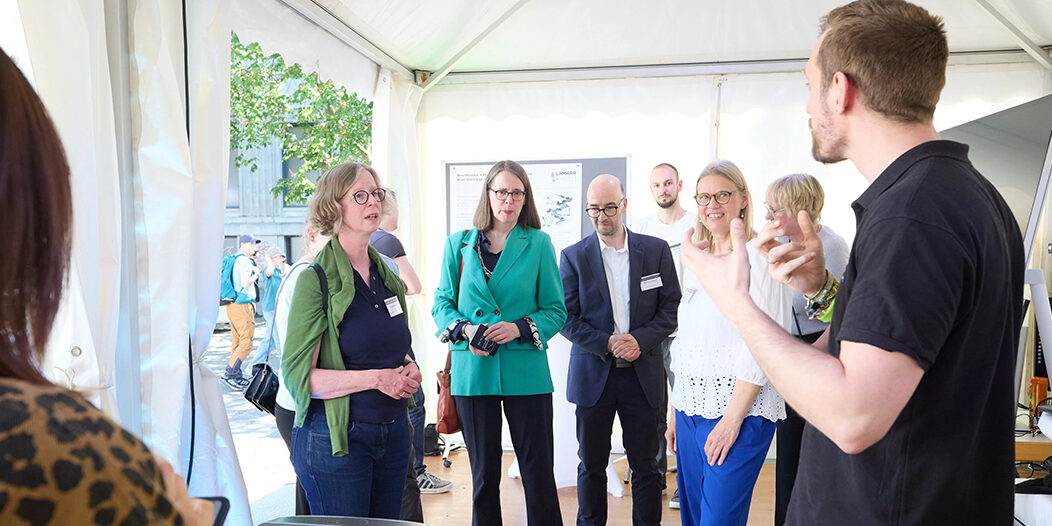
Mayor Nicole Unterseh visits the Informatik Bonn booth at the 15th Bonn Science Night. © Stadt Bonn
Bonn Science Night: Diagnosing the Future with AI
Bonn Science Night Showcases AI-Research in Medicine, Robotics, and the Environment
How will artificial intelligence transform the medicine of the future? What role will it play in addressing societal challenges such as education, caregiving, and managing natural hazards? These questions were the focus of the 15th Bonn Science Night on May 21 and 22, 2026, under the theme “Diagnosis: The Future.” The theme tied in with the 2026 Year of Science, “Medicine of the Future,” while also focusing on technological developments that extend far beyond the healthcare sector. Universities, research institutes, and scientific organizations from the region presented current research on Bonn’s Münsterplatz and invited the public to engage in direct dialogue.
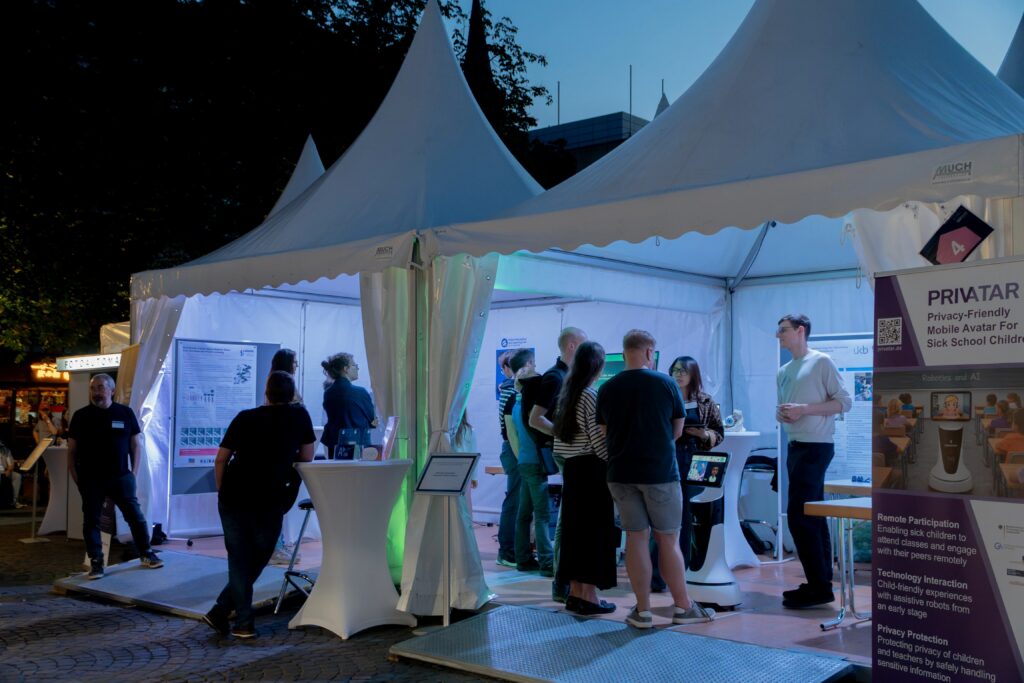
The Lamarr Institute for Machine Learning and Artificial Intelligence, the Department of Computer Science at the University of Bonn, the Bonn-Aachen International Center for Information Technology (b-it), and Fraunhofer Institute for Intelligent Analysis and Information Systems IAIS joined the event with a shared AI tent. Together, they showcased how artificial intelligence is already being applied in medicine, education, environmental research, and robotics.
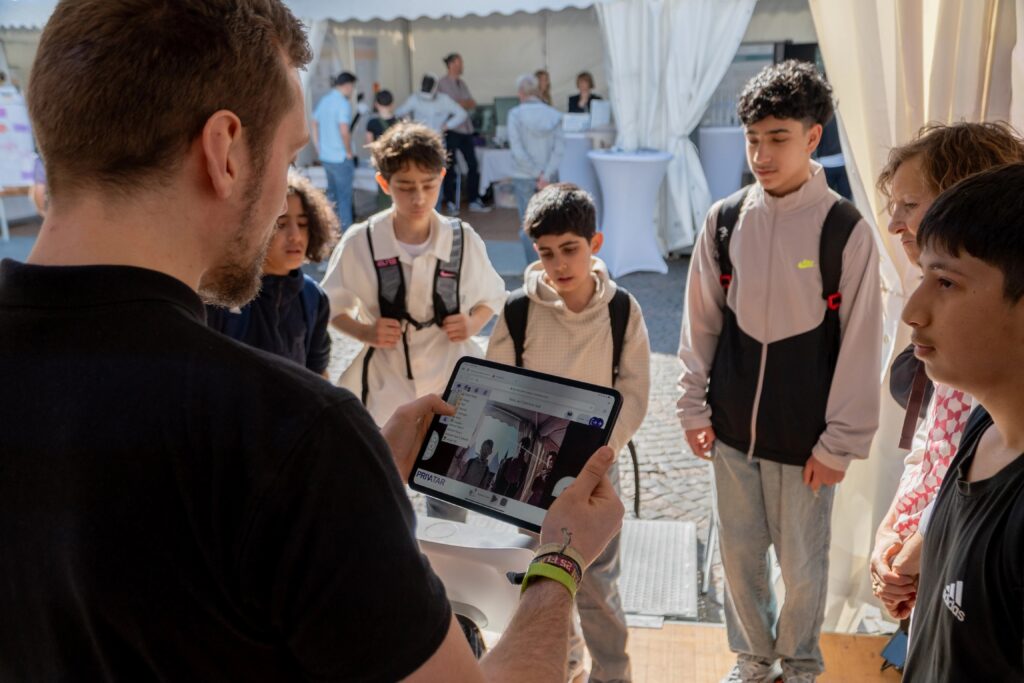
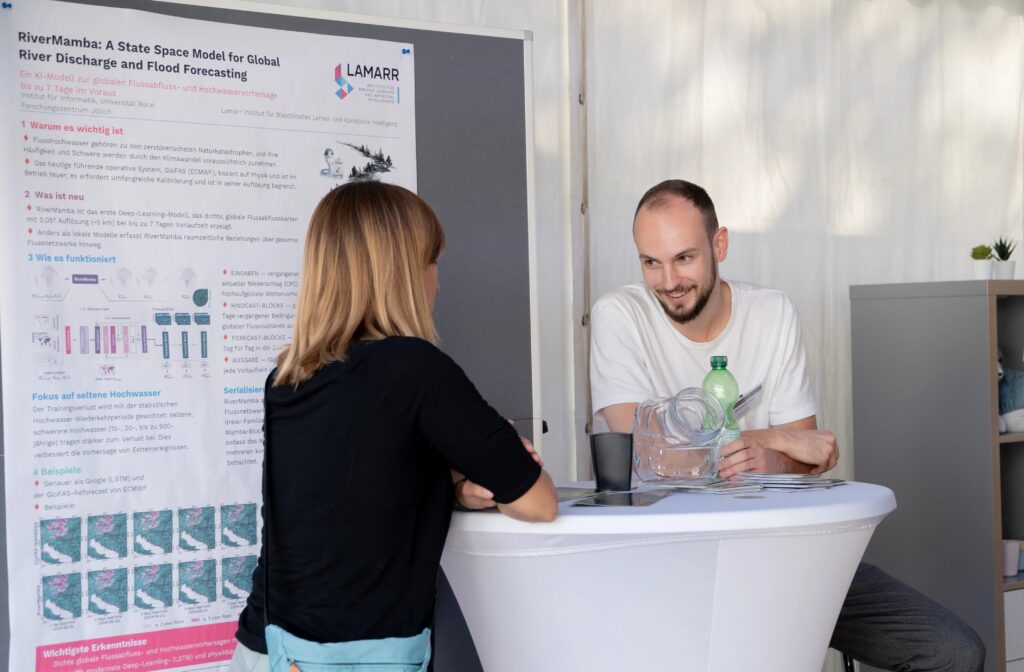
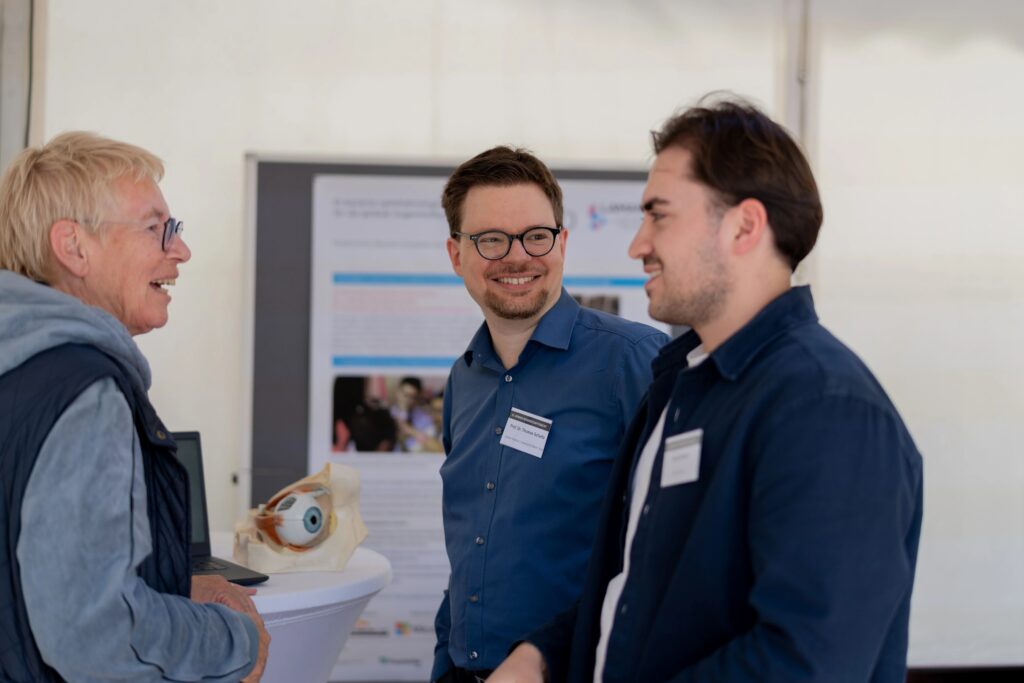
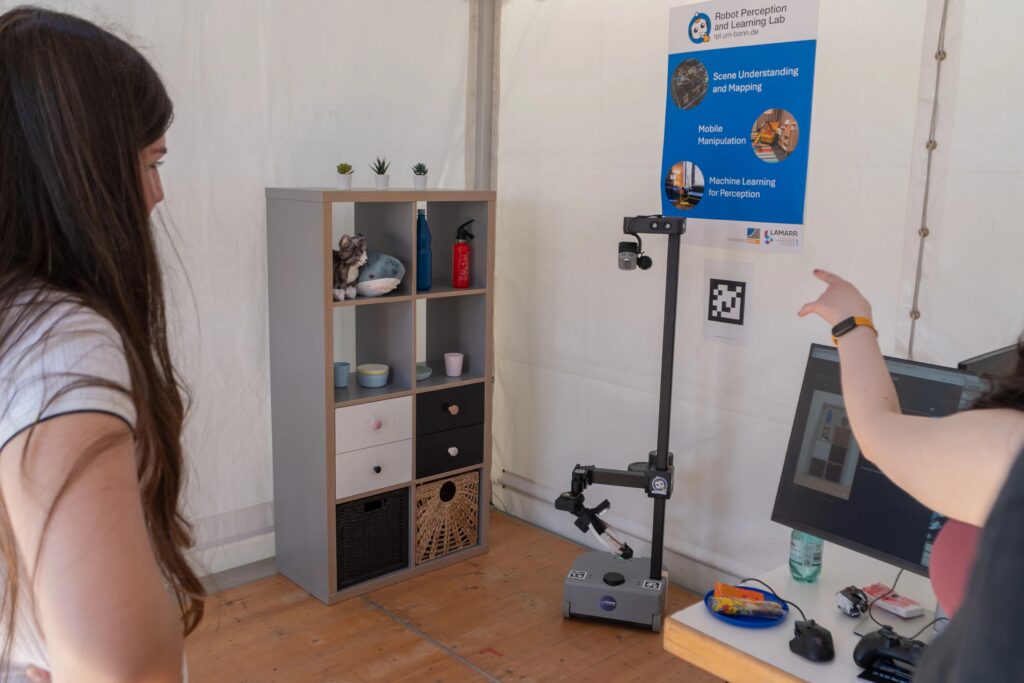
Among the exhibits on display was the PRIVATAR telepresence robot from Prof. Dr. Maren Bennewitz’s research group, which enables chronically ill children to participate in classes remotely. Jun. Prof. Dr. Hermann Blum’s research group showcased current research on household robotics. With RiverMamba, Prof. Dr. Jürgen Gall’s research group presented an AI system for predicting flood events, while Prof. Dr. Thomas Schultz’s research group provided insights into AI-supported methods for analyzing medical image data and surgical videos.
School classes interacting with researchers
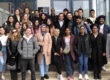
A particular highlight for the Lamarr Institute was the visit of numerous school classes on Friday morning. At the exhibits, students engaged directly with researchers, discussing current developments, potential applications of robots in everyday life, and the societal impacts of data-driven technologies.
These direct interactions with the exhibits highlighted how events such as Bonn Science Night can make current research more accessible and inspire an early interest in computer science, robotics, and artificial intelligence.
Dialogue on the Future of Bonn as an AI Hub
The visit by a political delegation from the city of Bonn on Friday afternoon also provided an opportunity to discuss current developments in AI research in Bonn. The focus was on the applications presented in the fields of medicine, robotics, and environmental research, as well as their significance for future societal issues. In particular, the exhibits on medical image analysis and human-robot interaction reflected recent developments in Germany’s High-Tech Agenda, which now includes health as a key focus area within its AI strategy.
 © Maximilian Waidhas / Uni Bonn
 © Viktoria Hytrek / Uni Bonn
 © Viktoria Hytrek / Uni Bonn
 © Viktoria Hytrek / Uni Bonn
 © Maximilian Waidhas / Uni Bonn
Contact
Press & Public Relations
Daria Tomala, M.Sc.
Maximilian Waidhas, M.A.
Email: pr@bit.uni-bonn.de