© Private
Trustworthy Machine Learning for Al Safety and Al-driven Scientific Discovery
Dr. Tim G. Ruhland (NYU Data Science)
14. August 2024
10:00 – 11:00
Abstract:
Machine learning models, while effective in controlled environments, can fail catastrophically when exposed to unexpected conditions upon deployment. This lack of robustness, well-documented even in state-of-the-art models, can lead to severe harm in high-stakes, safety-critical application domains such as healthcare and to bias and inefficiencies in Al-driven scientific discovery. This shortcoming raises a central question: How can we develop machine learning models we can trust?
In this talk, I will approach this question from a probabilistic perspective, stepping through ways to address deficiencies in trustworthiness that arise in model training and model deployment. First, I will demonstrate how to improve the trustworthiness of neural networks used in medical imaging by incorporating data-driven, domain-informed prior distributions over model parameters into neural network training. Next, / will show how a probabilistic perspective on prediction can make vision-language models used in healthcare settings more human-interpretable and transparent. Throughout this talk, I will highlight carefully designed evaluation procedures for assessing the trustworthiness of machine learning models used in healthcare and Al-driven scientific discovery.
Bio:
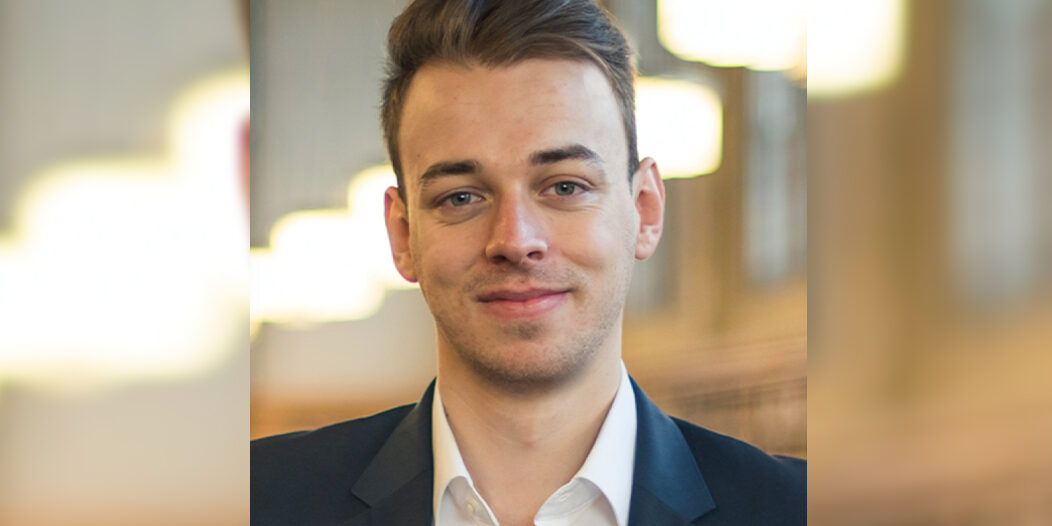
Tim G. J. Rudner is a Data Science Assistant Professor and Faculty Fellow at New York University’s Center for Data Science and an Al Fellow at Georgetown University’s Center for Security and Emerging Technology. He conducted PhD research on probabilistic machine learning at the University of Oxford, where he was advised by Yee Why Teh and Yarin Gal. The goal of his research is to create trustworthy machine learning models by developing methods and theoretical insights that improve the reliability, safety, transparency, and fairness of machine learning systems deployed in safety-critical and high-stakes settings. Tim holds a master’s degree in statistics from the University of Oxford and an undergraduate degree in applied mathematics and economics from Yale University. He is also a Qualcomm Innovation Fellow and a Rhodes Scholar.