This talk outlines my research trajectory in language understanding and reasoning. I begin with event extraction through question-answering techniques, followed by constructing event schemas. Subsequently, I investigate the translation of natural language into symbolic representations to facilitate faithful reasoning. Currently, my work explores training language models using both natural language and knowledge graphs, as well as evaluating narratives through knowledge graphs.
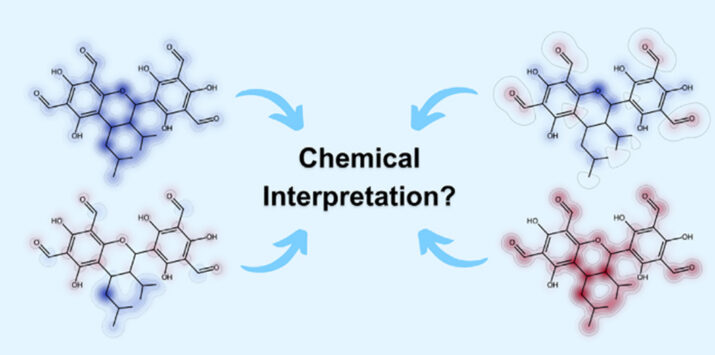
New study conducted by Prof. Dr. Bajorath and Sanjana Srinivasan at b-it and the Lamarr-Institute at the University of Bonn show the potential of language models in finding new medications. The researchers have created a chemical language model comparable to ChatGPT to predict potential active ingredients with special properties. Following a training phase, the AI was able to exactly reproduce the chemical structures of compounds with known dual-target activity that may be particularly effective medications.
The past decade of AI was largely driven by one question: how to make large language models work at all. How to scale them, stabilize them, and push their capabilities far enough to be usable.
Machine learning models, while effective in controlled environments, can fail catastrophically when exposed to unexpected conditions upon deployment. This lack of robustness, well-documented even in state-of-the-art models, can lead to severe harm in high-stakes, safety-critical application domains such as healthcare and to bias and inefficiencies in Al-driven scientific discovery. This shortcoming raises a central question: How can we develop machine learning models we can trust?
The past decade of AI was largely driven by one question: how to make large language models work at all. How to scale them, stabilize them, and push their capabilities far enough to be usable.
New study conducted by Prof. Dr. Bajorath and Sanjana Srinivasan at b-it and the Lamarr-Institute at the University of Bonn show the potential of language models in finding new medications. The researchers have created a chemical language model comparable to ChatGPT to predict potential active ingredients with special properties. Following a training phase, the AI was able to exactly reproduce the chemical structures of compounds with known dual-target activity that may be particularly effective medications.
The advances in language technologies has seen attempts at addressing increasingly complex tasks such as hate speech detection, in addition to longstanding tasks such as language generation and summarization. However, in spite of the advances and increased public and research attention to such tasks, language technologies broadly still broadly and widely cause social harms such as the propagation of social biases (in increasingly sensitive areas.
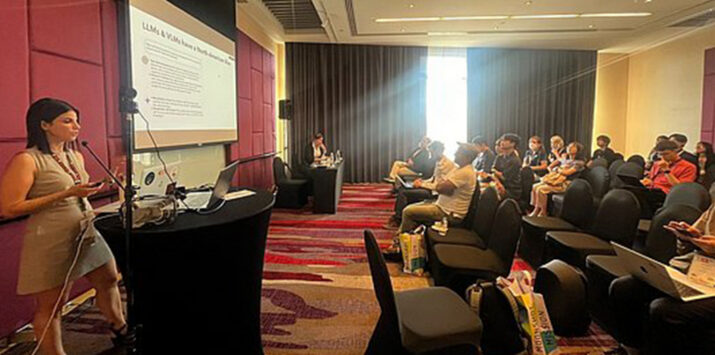
In this talk, I will discuss sources of biases and suggested technical interventions, in order to identity whether they address the underlying issues. In particular, I will attend to the political reality of how language technologies are deployed and what their use is. Through this discussion, I hope to highlight pathways for research on language technologies to be used in service of society.
Bias in large language models is a well-known and unsolved problem. In our new paper “Do Multilingual Large Language Models Mitigate Stereotype Bias?” we address this challenge by investigating the influence of multilingual training data on model bias reduction.
While large language models (LLMs) perform well on a variety of language-related tasks, they struggle with tasks that require planning. We apply the existing MuZero algorithm to enhance the planning capabilities of LLMs in dialog settings. MuZero uses a neural network to represent observations into a latent space, and then performs Monte Carlo tree search in the latent space using dynamics learned through self-play. We develop a simulated dialog environment to train the MuZero-based model on conversations with a generative LLM such as DialoGPT. We also investigate modifications to the model architecture, such as replacing the representation network by a transformer pretrained on sentence classification. We evaluate our algorithm on realistic multi-turn dialog planning tasks, such as steering the dialog topic to a predefined goal.
This site uses essential cookies (always active for basic functions) and optional cookies for analytics. We respect your privacy under GDPR – choose to accept or reject non-essential cookies. See our Data Protection for details on your rights.