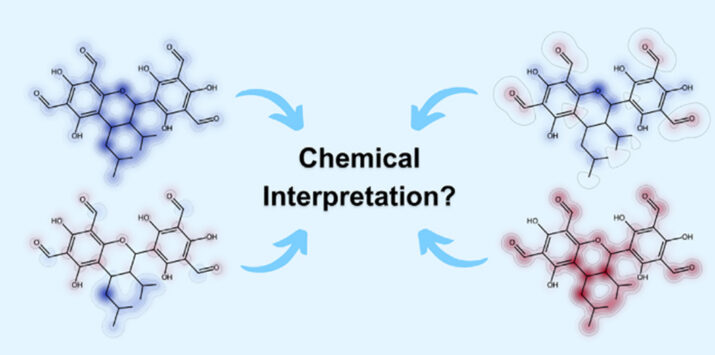
Artificial Intelligence is achieving increasingly impressive results in drug discovery. Yet as these models become more powerful, they also raise a fundamental scientific question: when do they produce reliable scientific insights, and when do they merely generate plausible predictions?
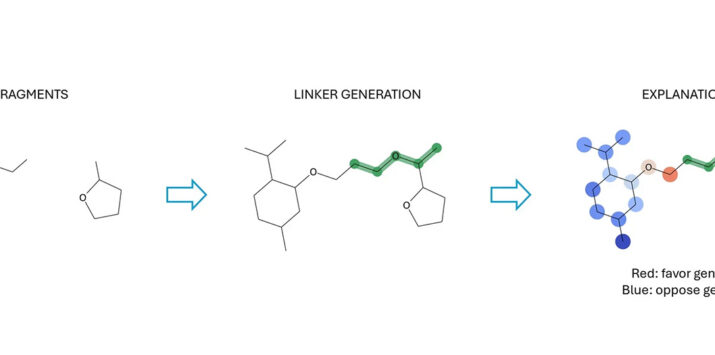
In the search for new drugs, artificial intelligence in the form of diffusion models is being used in drug design. What exactly does AI do in this context? Dr. Andrea Mastropietro and Prof. Dr. Jürgen Bajorath from Life Science Informatics at the University of Bonn and the Lamarr Institute for Machine Learning and Artificial Intelligence have investigated this.
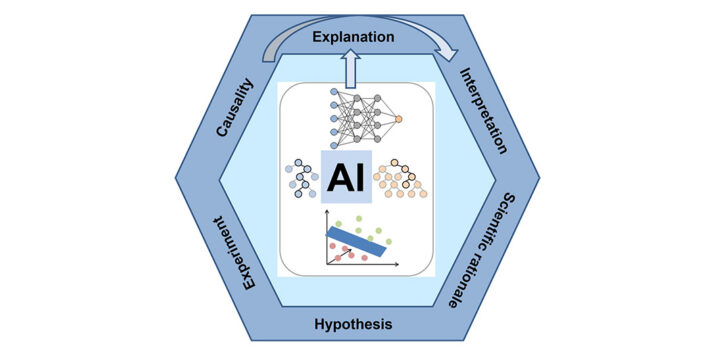
New publication of b-it Professor Dr. Jürgen Bajorath in the journal “Cell Reports Physical Science” shows how science can benefit from AI and what scientist need to look out for.
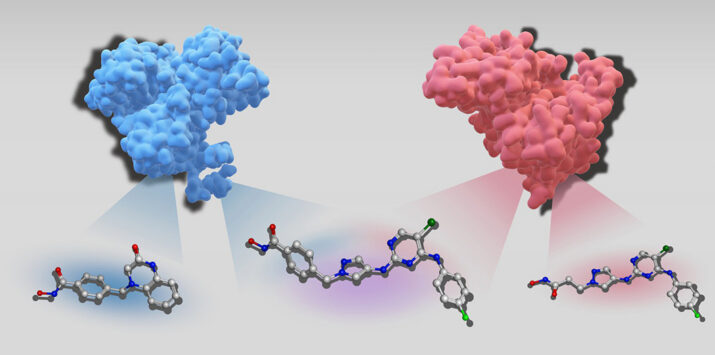
New study conducted by Prof. Dr. Bajorath and Sanjana Srinivasan at b-it and the Lamarr-Institute at the University of Bonn show the potential of language models in finding new medications. The researchers have created a chemical language model comparable to ChatGPT to predict potential active ingredients with special properties. Following a training phase, the AI was able to exactly reproduce the chemical structures of compounds with known dual-target activity that may be particularly effective medications.
New study conducted by Prof. Dr. Bajorath and Sanjana Srinivasan at b-it and the Lamarr-Institute at the University of Bonn show the potential of language models in finding new medications. The researchers have created a chemical language model comparable to ChatGPT to predict potential active ingredients with special properties. Following a training phase, the AI was able to exactly reproduce the chemical structures of compounds with known dual-target activity that may be particularly effective medications.
Artificial intelligence (AI) is on the rise. Until now, AI applications generally have “black box” character: How AI arrives at its results remains hidden. Prof. Dr. Jürgen Bajorath, a cheminformatics scientist at b-it, and his team have developed a method that reveals how certain AI applications work in pharmaceutical research. The results are unexpected: the AI programs largely remembered known data and hardly learned specific chemical interactions when predicting drug potency. The results have now been published in “Nature Machine Intelligence”.
This site uses essential cookies (always active for basic functions) and optional cookies for analytics. We respect your privacy under GDPR – choose to accept or reject non-essential cookies. See our Data Protection for details on your rights.