 © Unsplash
  © Unsplash
  © Colourbox
  © Unsplash
  © Adobe Stock
  © Unsplash
  © Unsplash
  © Unsplash
  © Unsplash
These areas address some of today’s most pressing scientific and societal challenges — from personalized medicine and intelligent healthcare to trustworthy Artificial Intelligence (AI), digital media, and the future of autonomous technologies. In an era where AI and data-driven solutions are transforming every aspect of life, our interdisciplinary research contributes to shaping innovation with global impact. Learn more about our research groups and their leaders below.
© Unsplash Prof. Dr. Rafet Sifa
University of Bonn | Fraunhofer IAIS | Lamarr Institute
The Applied Machine Learning Lab (AML) develops hybrid, interpretable machine learning systems for real-world challenges in text mining, behavioral analytics, and medical informatics.
© Unsplash Prof. Dr. Teena Chakkalayil
Hochschule Bonn-Rhein-Sieg
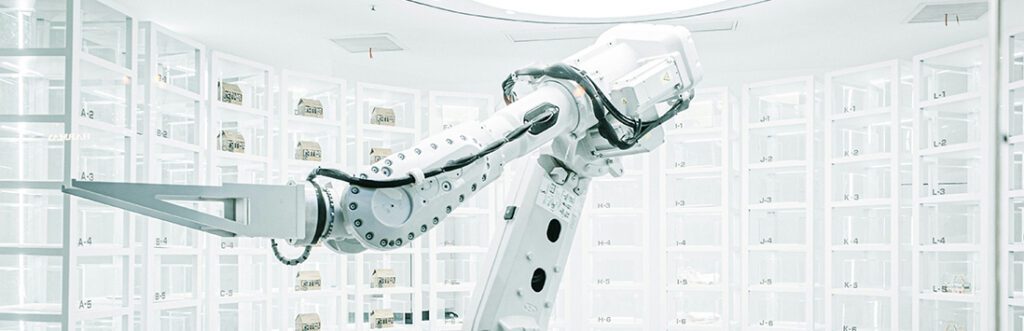
The Autonomous Systems Group advances cognitive and service robotics, focusing on fault detection, reliability, explainability, software engineering, domain-specific modeling, and perception for robotic systems.
© Colourbox Prof. Dr. Martin Hofmann-Apitius
Fraunhofer SCAI
This group advances biomedical research through knowledge graphs, text mining, and AI algorithms, supporting decision-making in neurodegenerative disease modeling, early drug discovery, and more.
© Unsplash Prof. Dr. Holger Fröhlich
Fraunhofer SCAI
This group develops robust, interpretable AI/ML methods to deliver the right therapies for individual patients, focusing on precision medicine, drug discovery, and trustworthy clinical applications.
© Adobe Stock Prof. Dr. Lucie Flek
Lamarr Institute | University of Bonn
The Data Science & Language Technologies Group advances personalization, knowledge augmentation, and robust, fair language technologies to solve real-world societal challenges.
© Unsplash Prof. Dr. Jürgen Bajorath
LIMES Institute | Lamarr Institute
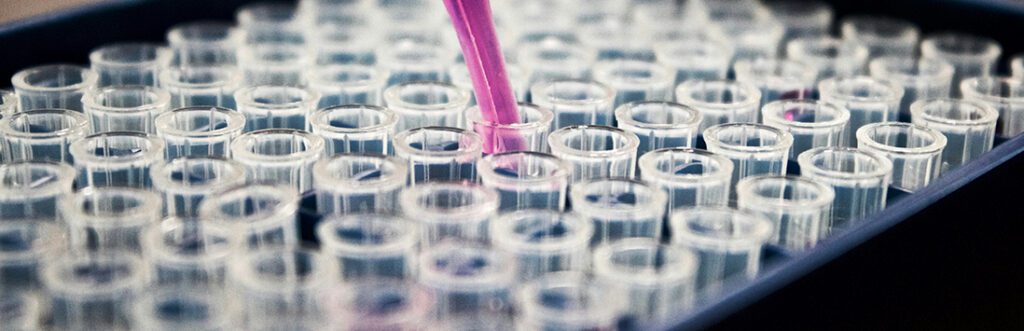
The Life Science Informatics and Data Science Group applies big data analytics, machine learning, and AI to medicinal chemistry, structure-activity relationships, and virtual screening for drug design.
© Unsplash Prof. Dr. Jan Oliver Borchers
RWTH Aachen University
The Media Computing Group designs and studies innovative interactive systems, from wearable and shape-changing user interfaces to interactive textiles and AR, making advanced technologies more usable and human-centered.
© Unsplash Prof. Dr.-Ing. Thomas Schultz
University of Bonn | Lamarr Institute
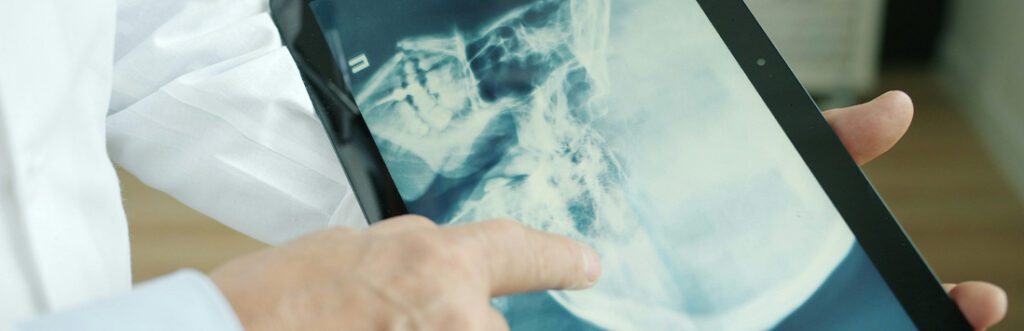
The Visualization & Medical Image Analyis Group develops AI for medical image/video analysis, explainable AI visualization, and trustworthy methods with domain generalization to gain insights from complex, dynamic medical imaging data.
With more than 20 years of history, b-it has been home to many distinguished research groups that have significantly contributed to its academic profile. While some of these groups have completed their work, their achievements and the dedication of their professors remain an integral part of b-it’s legacy.
Below you can find a selection of former group leaders and their contributions to the institute’s development
© Unsplash These emeritus groups advanced multimedia pattern recognition, intelligent vision systems & autonomous robotics, and computer algebra with cryptography applications.